Monday, July 2, 2012


An author signing event not to be missed! Robert L. Hunton and Michaele Lockhart together at the Bridge Gallery Art Walk, Ventana Plaza, Suite 113, 5425 N. Kolb Rd., Tucson, AZ, Thursday, July 12, 2012, 5 - 9 p.m.
Two southern Arizona writers with a flair for fiction will meet/greet, talk about their books, and sign copies. Plan to spend a summer evening strolling Ventana Plaza, surrounding yourself with wonderful art, and checking out some excellent summer reading selections.
 
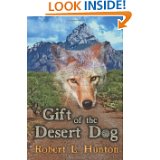
Robert L. Hunton is the author of the 'Borderlands Trilogy:' 'Gift of the Desert Dog,' 'Secrets of the Medicine Pouch,' and 'Coyote-meeter's Abyss.' His novels for young readers also include 'Ripper's Tomb: An Eddie Castro Boarding Adventure,' and 'Dead End Summer.'
 
Michaele Lockhart has authored her latest, 'Hoarding Lies, Keeping Secrets,' 'Last Night at the Claremont,' and a fun summer novella, 'Men with Black Briefcases.'

Wednesday, June 27, 2012

 
Join me in my study! I know you're curious...so here is a look inside the world of my reading and writing; a world that I created to provide solitude and inspiration, a place where I can contemplate story, arc, pacing, and characterization. This is a place where my careers as a public school educator and writer come together--my accomplishments in the classroom, reminders of where I've been and where I'm headed, memorabilia, and examples from my service to students and parents.
Books, reading, and writing remain a cornerstone of who I am. I am always in high admiration of the collective effort and talent required to produce the volumes that line my shelves. I feel I am a better writer because I surround myself with great writing. Also, I'll be answering the questions: Who are my favorite authors, and what titles? From Melville to Morrison, the work is here. So, come on in and share a few moments in my space.
I think you'll enjoy it!

Sunday, June 24, 2012

The following discussion strand is currently running at: LinkedIn.com/FictionWritersGuild/'Are All Prologues Bad?'  I definitely started something with my input concerning 'fictional forewords/afterwords.' The immediate result? 88 hits at this blog site! I'd love to hear (view) your comments as well. I hope you enjoy the post!

Robert HuntonI have a foreword/afterword in my latest middle grade/YA novel, 'Secrets of the Medicine Pouch.' Looking through my editors comments made about a year ago (the book came out at the end of March), I'm noting that he liked how the foreword helped him transition from Book One in the series (2010) into the second story mentioned above. And although he has often expressed to me the (his) need to see each installment as 'stand alone,' he indicated that in this case it worked both ways--strengthening the plot and advancing the trilogy storyline.
I believe prologues/forewords can be useful, but I would add this caveat: If you write for young readers, such an intro must be short (say, a single scene-a page or two) and powerful, real with strong hook. You can stretch these parameters a bit, but not a lot.
As the prologue concludes, you want a 13 year-old's eyes to be literally jumping ahead into the opening lines of Chapter One. If they've already read the first book in a series, then what you established there will likely aid you. If they haven't, you are left with the strength of this device and the story at hand. Your insurance lies with 'Kapow!' 


Robert Hunton • ----------, I talked briefly about length in my previous comment. When it involves young readers, this (length) is of particular concern.
My thanks to --------------, who among others (Arthur C. Clarke, Hugo Award winner, Norman Spinrad), uses a fictional foreword in '-------------.' My response to 'definitions' would be to avoid letting such conventions get in the way of a good book. There are any number of things that might need explaining at the forefront of a novel, and there isn't a literary form out there that someone hasn't used as a fictional device. I'd say, where it's fiction, anything goes.                   


 Robert HuntonI couldn't agree more with ------------ about 'not making the reader start the story twice.' The foreword, or whatever you want to call it, must be integral to the story. Such that, you ARE reading the story when you read it. Take a look at Katherine Paterson's 'Jacob Have I Loved,' and you will discover wonderful use of this device. Also, S.E. Hinton's 'Hawkes Harbor' comes to mind. 

------------- • Robert, A fictional foreword. Now that's a cool idea. I think that's been used in novels that are supposed to be true--where the hero has wandered off to another time or dimension. I'm glad you mentioned that. 

Robert Hunton • ----------, yes, a fictional foreword as a structural device. You mentioned the need for 'time lapse' to consolidate events, providing a neater picture (history/backstory) in the mind of the reader. It can be accomplished in this way.
Most often, a flashback, for example, predictably feeds the plot and explains a character's actions by exposing a critical event from the past--it is the 'here and now' interrupted by a quick visit to 'back then.' I'm sometimes turned off by flashbacks, even though I used one in the opening chapter of 'Gift of the Desert Dog,' because they don't transition well or are distractingly long. But what about writers who have successfully reversed this order to create a flashforeword, keeping it short and effective, and positioning it (obviously) at the opening of the novel?
I think you are right; it (the fictional foreword/afterword) is typically thought of as an intro/conclusion in stories that are supposed to be true. And yet, why not add realism to any piece of fiction (I mentioned him before), as Arthur C. Clarke often did in sci-fi, particularly using afterwords? What makes his fictional predictions, conclusions so chilling? They seem so real...when reality is more about his clever use of devices. 


 Robert Hunton • ---------,----------,-------,-------, others, I agree..fantastic discussion. Of particular benefit to me has been secondary input around definitional boundaries, i.e. prologue and/or foreword, flashback use, structural devices, etc.
I made the statement earlier that anything (use of devices) goes in fiction, and I firmly believe that. A fictional story works (and sells) when it appears real to the reader. Any strategy that an author uses to get there is good stuff--entertains an audience, pushes the boundaries of definition, and challenges the writer to reconsider his/her overall strategy.
It's also about word choice. Mark Twain often expounded upon the importance of every single word used in a fictional piece. He called an 'acceptable' word the 'light from a firefly,' while the 'right' word was 'fireworks on the 4th of July.' And although his comparison is an obvious exaggeration, he was right to emphasize it for writers in such a way. And that's because his comments speak to boundaries, as well. Prologue. In context: How does it read, sound, play to the reader? Foreword? Preface? Prelude? Afterlude? Is the writer free to use any word in their work? Of course. Make up a word? Yeah, that too.
Is it possible that 'prologue' doesn't work in a particular story? That the word itself bores the reader? I like Katherine Paterson's choice of words to open 'Jacob Have I Loved' - 'Rass Island.' I also like that, throughout his novels, Edgar Rice Burroughs used the classic device of a fictional 'foreword' (yes, he used the word) to suggest in some way that the contents of the story to follow reflected true events. The device worked especially well in 'Gods of Mars,' part of his famed 'Martian Series.'
Let's keep this strand going. I think we all benefit from diverse views. 


Monday, May 28, 2012

For the final 'Folklore 2012' exercise at Valencia Middle School we took a fast trip along the spine of Appalachia, from Georgia in the south to the Canadian Maritimes in the north, including the Green Mountains of Vermont.
We used a terrific 'word harvest' activity to examine the colloquial tradition as it applies to post-Colonial American myth and legend - everything from 'A painter (panther) kilt muh chickens' to 'Course that blizzahd they had the lahst night theyah was wicked, ayuh,' referring to the horrific New England winter storms of 1888, and the equally devastating winter of 1816, known in legend as 'the year without a summer.' These and other events inspired the poetic voice of writers like John Greenleaf Whittier, Ezra Pound, Emily Dickinson, and Robert Frost.
The excerpt below is just a sample of verse that originated in those remarkable times and places. I hope you like it, the kids sure did!

'Months that should be summer's prime,
Sleet and snow and frost and rime.
Air so cold you see your breath,
Eighteen hundred and froze to death.'

Friday, May 25, 2012

My congratulations and best wishes to 8th graders throughout the TUSD! With graduation and promotion ceremonies going on at city schools today (5-23), 13 year-olds will join their peers in the fall as members of various high school classes of 2016.... It's an important day for families, whether their sons and daughters are off to Cholla, Tucson, Catalina Magnet, or elsewhere; they can take this opportunity to pause and reflect on the joined sacrifices made in pursuit of an educational dream.
These students know that nothing of value in life is easy to obtain - from solving difficult social problems to mastering the English language. I am confident they will do themselves and their families proud!
Good luck, and have a safe summer!

Saturday, May 5, 2012


                        Folklore 2012

Thanks once more to teachers and students at Valencia Middle School for participating in Thursday's 'Folklore 2012' program (the second installment of four). We had a terrific time with plains Indian winter counts, scenes from 'Dances With Wolves,' and a 'fashion show' that included a feather fan and an authentic antique buffalo bone chest protector, like the one worn by 'Wind in His Hair' in the film. My example from a Lakota original was fashioned (hand-made, using all natural materials) by Dr. Fred Wiseman, anthropology professor at Johnson (VT) State College, and tribal representative for the Abenaki Nation of Missisquoi.
Congratulations and good work to students who started their own 5-year winter counts! Before starting work on the counts, they studied the actual drawings of Oglala Sioux chief, American Horse (the accompanying photo is of his daughter, Julia American Horse, taken in 1930).
Next Thursday, we will measure and plot out a bull buffalo, and look at mysterious sand paintings of the Navajo! Awesome!